Narrow AI: The Safe Path to Workplace Enhancement
Discover how narrow AI systems are revolutionizing workplaces without causing mass disruption, creating a future where humans and AI work together to achieve unprecedented productivity and innovation.
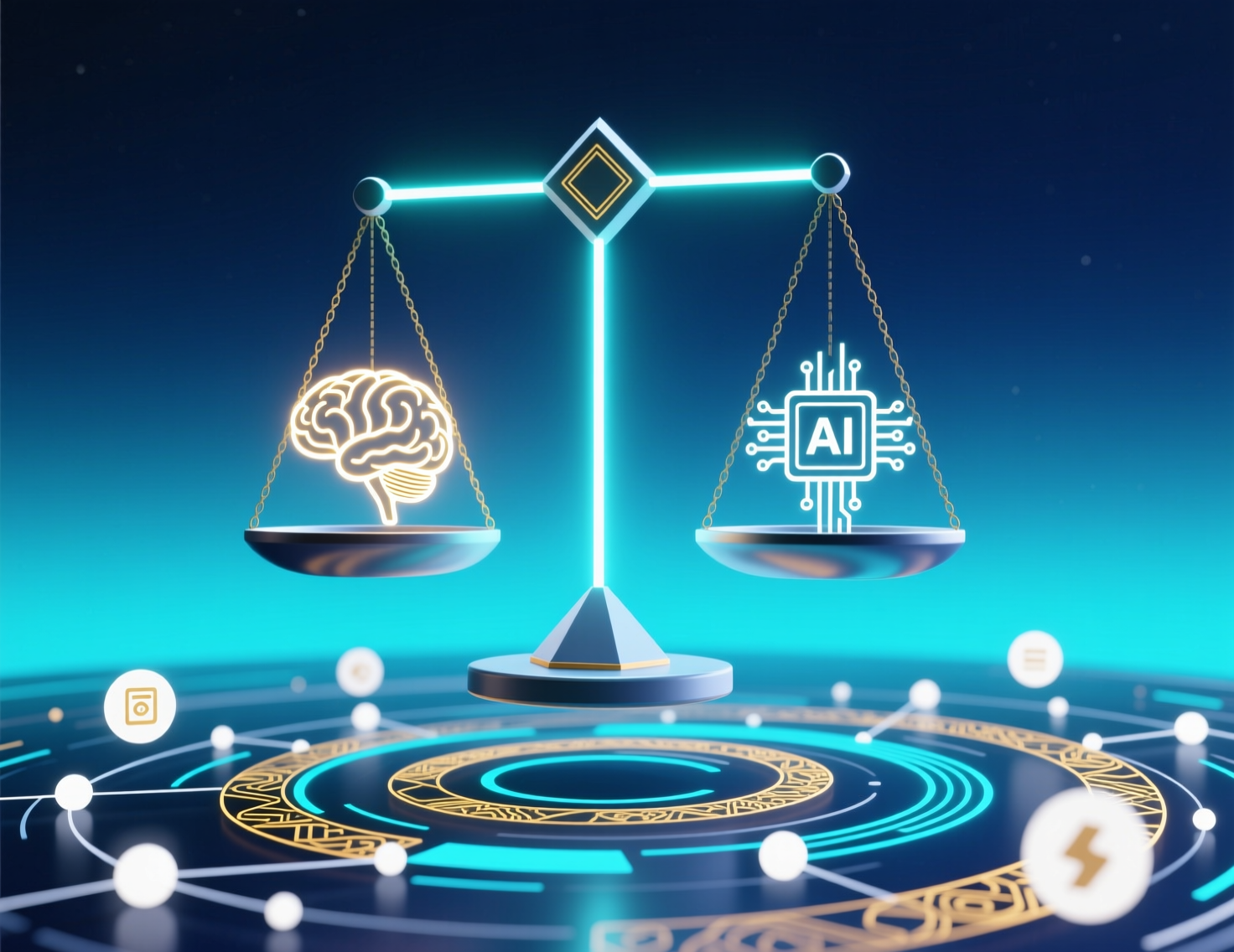
The conversation around artificial intelligence often sparks fear about job displacement and economic disruption. However, the reality of narrow AI—specialized artificial intelligence designed for specific tasks—tells a different story. Rather than replacing human workers wholesale, narrow AI is emerging as a powerful tool for workplace enhancement, creating new opportunities while preserving human value in the modern economy.
Understanding Narrow AI vs. General AI
Narrow AI, also known as weak AI or specialized AI, is designed to perform specific, well-defined tasks with exceptional efficiency. Unlike the theoretical general AI (AGI) that could potentially replicate human intelligence across all domains, narrow AI excels within clearly defined boundaries.
Key characteristics of narrow AI:
- Task-specific expertise with limited scope
- Requires human oversight and guidance
- Complements rather than replaces human capabilities
- Already deployed in countless applications today
The Job Market Reality: Enhancement, Not Replacement
Rather than eliminating jobs, narrow AI is creating entirely new categories of employment: AI specialists, data scientists, human-AI interaction designers, AI ethics officers, and process optimization consultants.
The most successful AI implementations focus on augmenting human strengths rather than replacing them: enhanced decision-making, automated routine tasks, improved accuracy, and 24/7 availability.
Industry-Specific Benefits
Healthcare
Narrow AI assists doctors with diagnosis while preserving the human touch essential for patient care.
Finance
AI algorithms detect fraud, but human financial advisors provide personalized guidance and build client relationships.
Manufacturing
Predictive maintenance AI prevents failures, while human technicians apply problem-solving skills.
Customer Service
AI chatbots handle routine inquiries, allowing human agents to focus on complex issues requiring empathy and creative problem-solving.
The Human Advantage in an AI World
Renowned historian and philosopher Yuval Noah Harari argues that while narrow AI excels at specific cognitive tasks, it fundamentally lacks the broad contextual understanding and creative adaptability that define human intelligence. As Harari notes, "AI is nowhere near human-level intelligence in most areas," emphasizing that current AI systems are "impressive but narrow specialists."
The real opportunity lies in recognizing that narrow AI systems are tools that enhance human decision-making rather than replace human judgment entirely. Certain capabilities remain uniquely human and become more valuable as AI handles routine tasks: emotional intelligence, creative problem-solving, ethical reasoning, leadership, and complex communication.
Building a Collaborative Future
Best practices for Human-AI integration:
- Start small with specific, well-defined processes
- Maintain human oversight in critical decisions
- Invest in training for effective AI collaboration
- Focus on complementarity rather than competition
The most successful organizations recognize that the goal isn't to choose between humans and AI, but to create synergies that benefit both productivity and job satisfaction.
Conclusion: Embracing the Partnership
Narrow AI represents a unique opportunity to enhance human capabilities without fundamentally disrupting the job market. By focusing on collaboration rather than replacement, we can build a future where technology amplifies human potential rather than threatening it.
The key to success lies in recognizing that narrow AI and human intelligence are complementary forces. Organizations that embrace this partnership approach will discover that narrow AI doesn't just preserve jobs—it makes them more fulfilling, productive, and strategically valuable. The future belongs to the powerful combination of humans and AI working together toward common goals.
Related Articles
The Future of AI Agents in Business Automation
Explore how AI agents are revolutionizing business processes, from customer service to complex decision-making, and what this means for the future of work.
Building Conversational AI: Best Practices and Tips
Learn the essential strategies for creating engaging, effective conversational AI experiences that delight users and drive business results.